
Termite Warning Signs Every Patna Homeowner Should Know
Termites can damage timber and other cellulose-containing materials while remaining out of sight. In a Patna home, check accessible wood, skirting, door frames, storage areas and wall edges, especially where there has been a leak or dampness. A visual sign is a reason to investigate, not a diagnosis: moisture, normal wear and other insects can look similar. This guide explains the main clues and what information to collect before asking for an inspection.
What to Check in a Patna Home
Building age alone does not tell you whether termites are present. Look at conditions around timber and foundations: persistent leaks, damp wood, soil or stored material touching timber, and places hidden from routine cleaning. Monsoon rain can expose drainage or water-storage problems, but termite signs can appear in any season. If you are in an apartment, ask the building manager whether there are similar signs in a shared basement, service shaft or other common area.
1. Mud Tubes Along Walls or Foundations
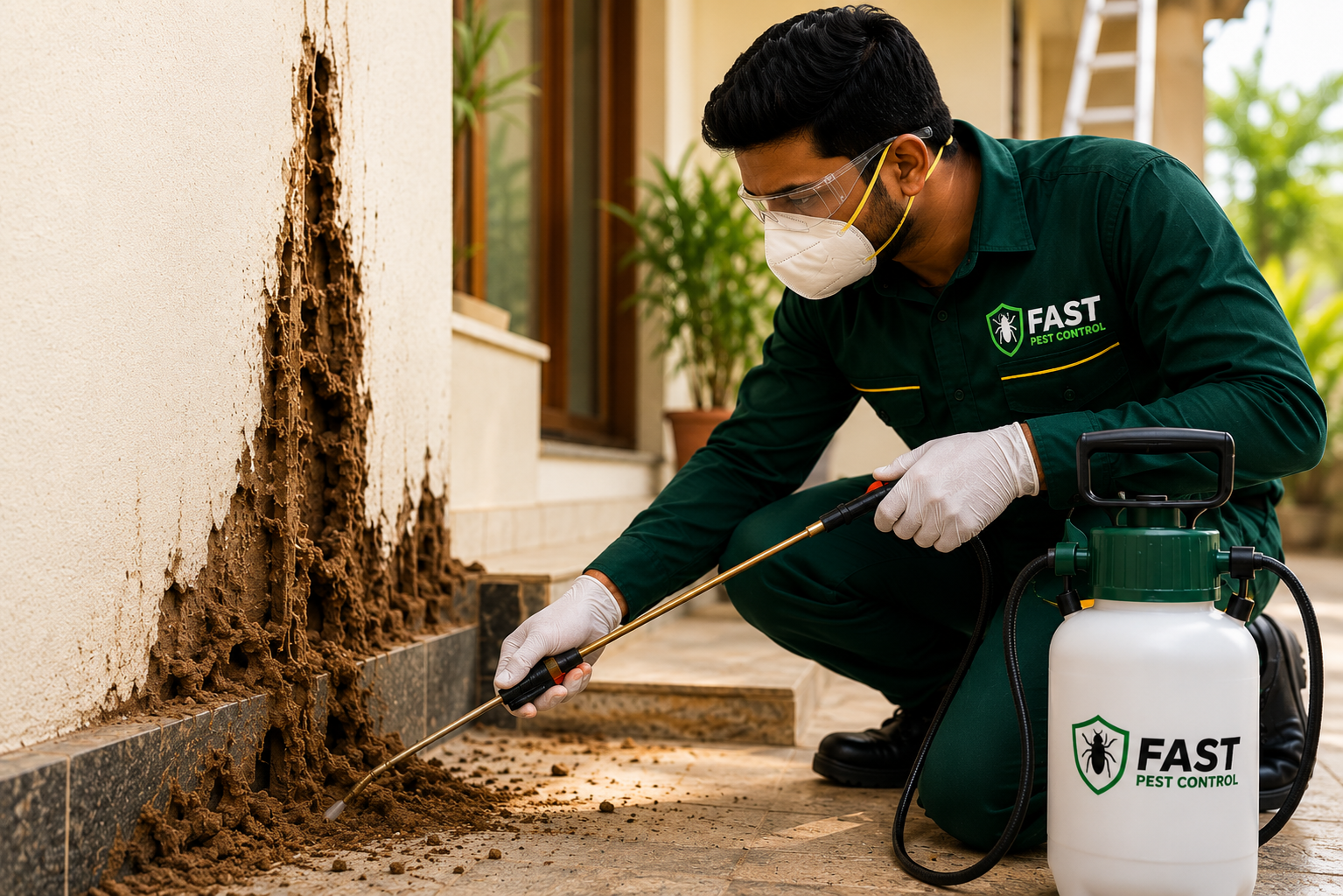
Some termites build shelter tubes from soil and other material as they travel between a nest and a food source. Tubes may appear along a foundation, wall edge or other route to timber. A tube is a strong clue to investigate, but it does not tell you how far activity extends. Do not break it open to check; photograph its location and ask an inspector to assess it. Rentokil PCI's termite identification guide explains how termite types can leave different signs.
2. Wood That Sounds Hollow
Wood may look intact on the outside while internal galleries weaken it. A hollow sound can be a clue, but it can also reflect the way a panel or frame is built. Avoid puncturing or forcefully probing a finished surface. Note which piece sounds different and check nearby wood for other signs before drawing a conclusion.
3. Discarded Wings Near Windows or Lights
Termites and flying ants can both swarm, and the insects may be confused. Termite swarmers generally have a straight waist, straight antennae and two pairs of wings of similar length; ants have a pinched waist, bent antennae and unequal wing pairs. Shed wings indoors are worth checking, but they do not by themselves prove that a colony is inside the home. Save a clear photo or sample if practical and have the insect identified.
4. Tight-Fitting Doors and Windows
A door or window that suddenly sticks is not specific to termites; humidity, paint and ordinary building movement can also affect a frame. Check for other signs on the wood and around its base, and note whether the problem changes with weather. Treat sticking as a prompt to inspect, not evidence of termite activity by itself.
5. Sagging Floors, Ceilings or Visibly Damaged Wood
Sagging floors or crumbling wood need prompt attention, but they can have causes other than termites. Do not put weight on a visibly weakened area. Ask a suitable building professional to assess structural safety and a pest inspector to check for insect activity; repairs and pest treatment are separate parts of the response.
What to Do When You Spot These Signs
Take a photo that shows the sign and its position, note when you first saw it, and check nearby accessible areas without damaging the surface. Record any recent leak or repair. Avoid applying household insecticide to a tube or drilling into a wall: this can obscure evidence without showing whether activity remains. An inspection can help identify the insect, assess the affected areas and explain treatment options. See our termite control service in Patna for the inspection and treatment process.
Reduce Moisture and Easy Access to Timber
Routine maintenance will not guarantee a termite-free property, but it can help address conditions that make an inspection more difficult. Repair plumbing leaks, keep drains clear, avoid storing wood directly against the building or on soil, and make sure the area around accessible timber can be inspected. If a damp patch keeps returning, fix the source rather than covering the mark with paint. For new construction or renovation, ask the builder what termite-prevention work is specified and keep the product and treatment records with the property documents.
Frequently Asked Questions
Can I treat a termite problem myself?
A household spray may affect insects it directly contacts, but it does not identify the species or show whether hidden activity remains. Do not drill, inject or apply a product off-label. Ask for an inspection and a treatment recommendation that matches the sign, property and product instructions.
How often should I check for termite signs in my home?
Include accessible timber, under-sink areas and visible foundation edges in routine home maintenance, and recheck after a leak or water intrusion. There is no single calendar interval that fits every building; follow any inspection schedule in your treatment agreement.
Does seeing flying termites once mean I have an infestation?
Not necessarily inside your home. Swarmers may come from a colony in or near the building, and flying ants can be mistaken for termites. Photograph the insect and where it appeared, then arrange identification if you are unsure.
Can I identify a termite species from a mud tube?
A tube can suggest a route used by termites, but species identification may require seeing the insect and checking other evidence. Ask the inspector to explain what they observed and what remains uncertain.
Related Articles

Noticed Any of These Signs?
Book a free termite inspection before it becomes a bigger problem.